When is Credit Cash Back Worth its Fee?

B
I like programming (at work) and learning for fun. You'll often find me cooking and working on my house in my spare time.
Search for a command to run...
I like programming (at work) and learning for fun. You'll often find me cooking and working on my house in my spare time.
No comments yet. Be the first to comment.
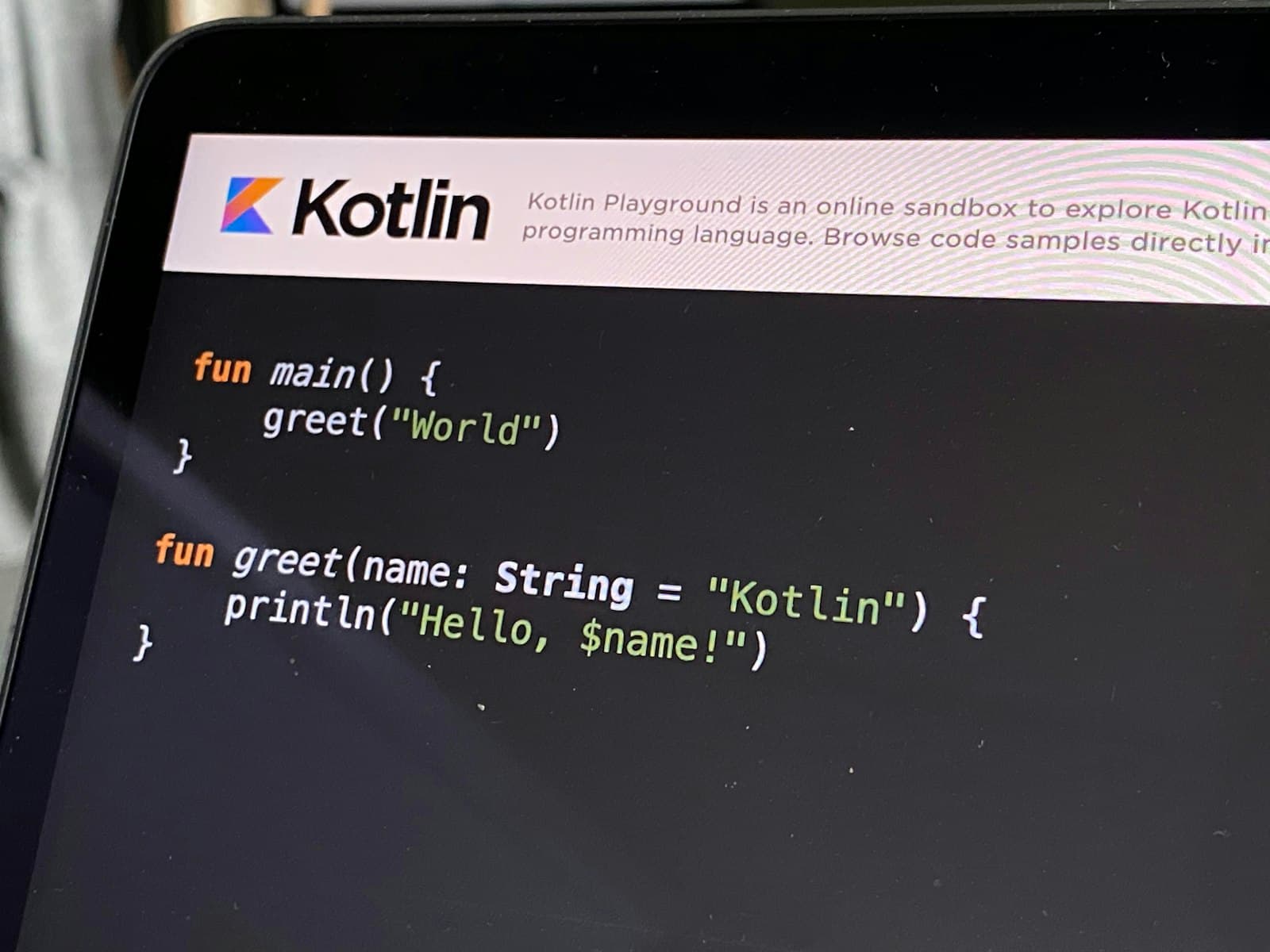
I want to get into the Kotlin community to accelerate my learning. Where should I go? Well, this was handy, https://kotlinlang.org/community/. I went through each of these resources. Unless stated oth

We're switching from Clojure to Kotlin at work. Is that good? I don't know yet! Here are some things I love about Clojure: its incredible REPL EDN keywords maps with heterogeneous keys and values
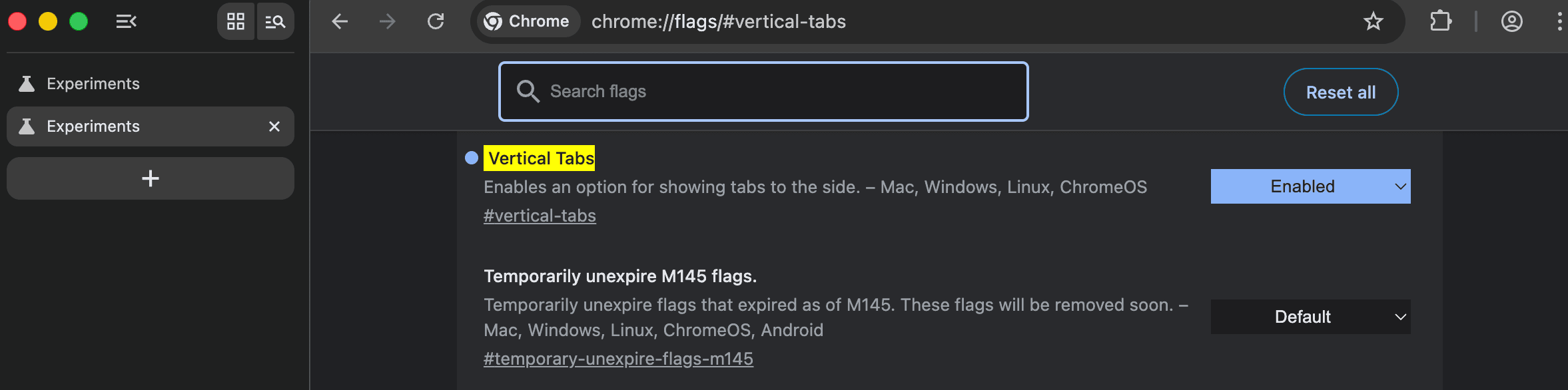
I've been using Arc Browser for a long time. Why? Because I love vertical tabs in my browser. They allow me to read more of each tab's title when I have a lot of tabs. What Are Vertical Tabs? Tabs are
Imagine rows of letters, numbers, and Greek letters: [[:a :b] [:1 :2] [:alpha :beta]] Now, you want to transpose them. You started with a vector of vectors. Clojure's map function is pretty amazing

I have a credit card that offers cash back on purchases. Credit cards provide a time buffer between when a charge is incurred and when funds leave the checking account paying it off. This helps avoid overdraft charges. Credit cards also offer fraud protection, and sometimes even warranties.
Some sellers don't charge a fee when paying via cash, debit card, or ACH transfer, but do when using a credit card. The fees I've experience are either flat or a percentage. I've wondered when the cash back becomes worth it. Let's break it down.
My electric utility charges a $5 fee when paying via credit card and my credit card offers 3% cash back on everything (really, it's a Robinhood Gold Card). On a $100 charge, the cash back $3, less than the fee. On a $200 charge, the cash back is $6, exceeding the fee. Finding the break-even point is subtle. It's time for some math!
I'll use lower case letters, e.g. c, for percentage values and capital letters, e.g. C, for dollar amounts. First, I'll define terms:
C cash back, e.g. $3 (say 3% on a $100 purchase)
F fee, e.g. $5
c cash back percentage, e.g. 3% or 0.03
P purchase amount, e.g. $100
The cash back earned isn't on the base amount, it's on the bill plus the fee. We can express this as:
C = c(P + F)
Using the credit card is worth it when the cash back is at least equal to the fee:
C ≥ F
With a substitution:
c(P + F) ≥ F
At what purchase amount does it make sense to use the credit card? Let's isolate P :
c(P + F) ≥ F
cP +cF ≥ F
cP ≥ F - cF
P ≥ (F - cF) / c
P ≥ F (1 - c) / c
Let's test it using the $5 fee and 3% cash back from before:
P ≥ 5 (1 - 0.03) / 0.03
P ≥ 161.67
This checks out: 3% of $166.67 ($161.67 plus the $5 fee) is $5.
So, at purchase amounts higher than $161.67, I start making money.
When I pay my water bill via ACH, there is no fee. However, with a credit card, the fee is 3%. Most of us assume the credit card cash back percentage has to exceed the fee percentage to be worth it. As we established earlier, the cash back is based on the purchase amount plus the fee, not the purchase amount alone. Let's see what the math tells us:
f fee percentage, e.g. 3% or 0.03
C cash back, e.g. $3 (say 3% from a $100 purchase)
F fee, e.g. $5
c cash back percentage, e.g. 3% or 0.03
P purchase amount, e.g. $100
How much is the fee?
F = fP
How much is the cash back?
C = c(P + F)
C = c(P + fP)
C = cP(1 + f)
Using a credit card makes sense once the cash back exceeds the fee. Let's isolate c:
C ≥ F
cP(1 + f) ≥ fP
c(1 + f) ≥ f
c ≥ f / (1 + f)
Note that the purchase amount doesn't matter.
Let's evaluate this with a 3% fee:
c ≥ 0.03 / (1 + 0.03)
c ≥ 0.02912621359
The cash back percentage doesn't need to be as large as the percentage fee!
Let's test that with an example. Say the bill is $100. With a 3% fee, the charge is $103. A cash back rate of 2.91% yields $3 in cash back and a cash back rate of 2.92% yields $3.01.
To determine whether using a credit card is worth it in the face of fees, remember:
For flat fees, you have to do some math: P ≥ F (1-c) / c
For percentage fees, having the cash back percentage equal to the fee percentage is always worth it. To arrive at the precise cash back percentage needed, use c ≥ f / (1 + f).
Footnote: Why did't I use LaTeX or Mathjax notation? I did. But, the Hashnode editor was very painful, and I experienced data loss. So, Italics it is.